The New Premiere at The English Theatre of Hamburg
Attention!
Dear spectator, do you know what a silver cow creamer is? If not, you will soon learn a lot about this precious object which plays a most important role in the play.
Master and Servant
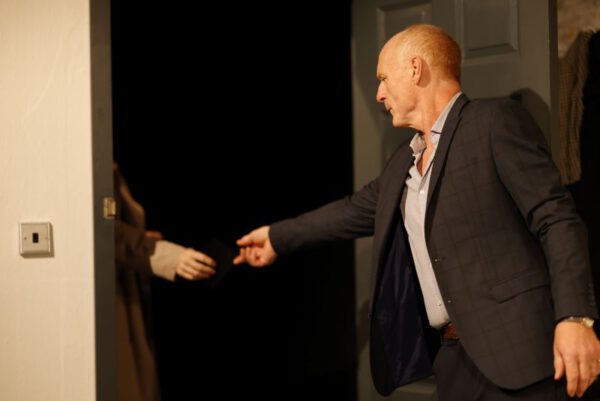
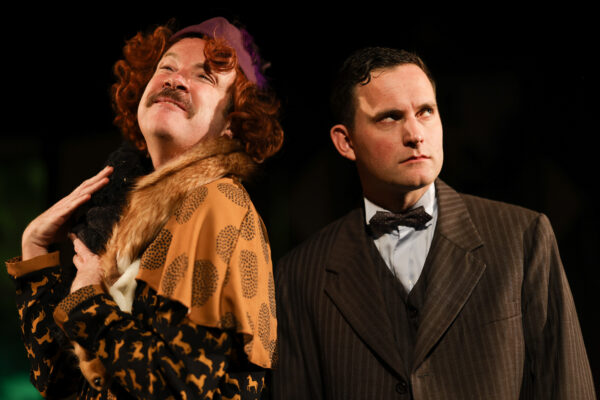
We meet Bertie Wooster, a typical British dandy, in his drawing-room. As many of his rich peers he is bored with his life and thus seeks diversion in various artistic activities. What about staging a one-man-show telling Bertie’s latest chaotic misadventures? It goes without saying that Bertie hasn`t the brains to shoulder this task without the help of his loyal and resourceful butler Reginald Jeeves.
An extremely precious object or much ado about (nearly) nothing
Before embarking on his career as a stage director and comedian, Bertie`s relative Aunt Dahlia sends him on a most precarious mission. “Go and steal a silver cow creamer for me”, she orders “and bring it back safely.” This much coveted object is a small antique, originating in Holland, used for pouring cream. Shaped as a cow it has a lid on its back for filling. Since there are just a few of them left, they are in high demand, particularly in upper-class circles. Aunt Dahlia knows for sure that one copy of this once commonplace item has recently been sold to Sir Watkyn Bassett, a gentleman who owns an impressive estate in the countryside.
Guests with “long fingers” on the road
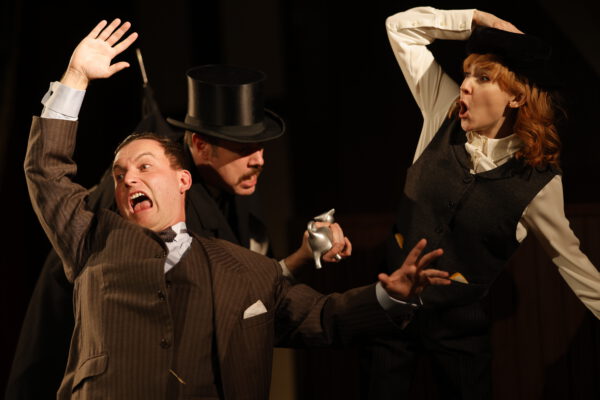
The search for the silver creamer starts in Totleigh Towers. Sir Watkyn’s residence hosts a number of strange characters, among them Bertie’s friend Gussie Fink-Nottle, Stiffy Byng, Harold “Stinker” Pinker and Madeline Basset, Sir Watkyn’s somewhat “otherworldly” niece. Gussie being deeply in love with Madeline asks Bertie for help in order to convince Sir Watkyn that he is the perfect match for Madeline. Poor Bertie is desperate. He knows that he is absolutely unable to cope with two tasks – to steal the silver cow creamer for Aunt Dahlia and at the same time play the matchmaker for Gussie and Madeline. Is there anyone around who can solve these problems?
A Perfect Servant
We have known it from the very beginning. Jeeves is the only person in the play who is apt to clear any and every situation. Throughout the chaotic second act he keeps a cool head, using his brains and resourcefulness to devise a brilliant idea that benefits all parties involved.
Believe it or not. In the end Aunt Dahlia gets her silver cow creamer and Sir Watkyn eventually approves of the relationship between dreamy Madeline and an extremely happy Gussie. And all this thanks to Reginald Jeeves, who proves that a servant is often endowed with more intelligence and resourcefulness than his snobbish master.
Conclusion: All’s well that ends well.
Hilarious!!
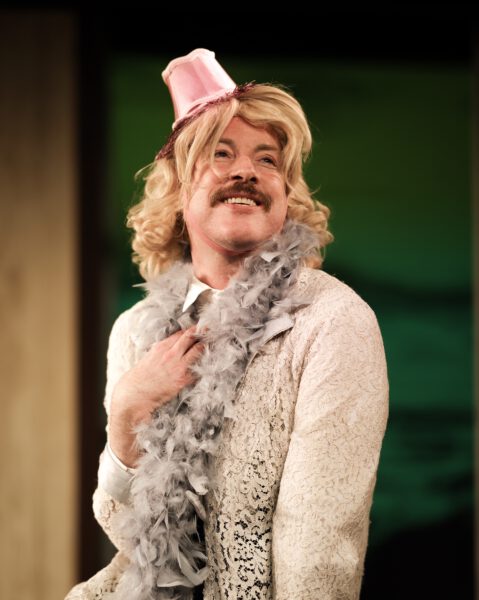
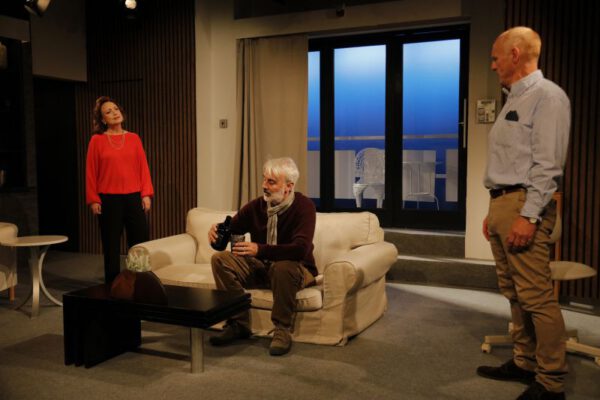
This highly amusing production stars only three actors who slip in no time from one part into the other, feminine and masculine. Katherine Rodden, a pretty blonde, is “in charge” of at least five different characters, including youngish ladies, old “dragons” and a policeman whose helmet is stolen by a person lacking respect for authority. William McGeough is not only Reginald Jeeves, the butler with the stiff upper lip. He also plays several other roles in male or female outfit and corresponding pitch of voice. Michael Parker is the only actor charged with only one role, that of Bertie Wooster, an affable young gentleman “from family” who faces quite a lot of misadventures from failed romances to extremely comical escapades.
Conclusion: An outstanding performance. The spectators are having a jolly good time. Congratulations.
A basket of oddballs
The three actors on the stage are given a hard time coping with their multiple roles. They bring Sir Watkyn’s estate Totleigh Towers and its more than strange residents to life: Reverend Pinker “Stinker”, Major Plank, Madeline, her fiancé Gussie and last but not least Sir Watkyn himself. Spoiled Bertie seems to be sort of a victim of the circumstances within his peers of wealthy good-for-nothings. Let us put it this way. He is just an arrogant, if likeable member of the ruling class.
Summery
Sir Pelham Grenville Wodehouse – nicknamed Plum – (1881 until 1975) a member of the British aristocracy, worked as a banker before he started his career as a writer of successful novels and short stories. No doubt, he was one of the most read humorists of the 20th century. With Reginald Jeeves he created a unique British character, an intelligent, cunning and resourceful butler who serves his employers with absolute loyalty. In spite of his birth into aristocracy Wodehouse greatly enjoyed making fun about his peers in denouncing their often high-handed attitude towards members of the “lower” classes.
The fascination of J.P. Wodehouse’s literary work
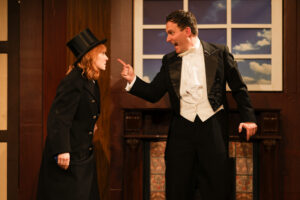
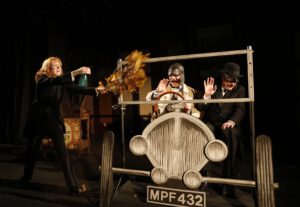
The twins Robert and David Goodale staged “Jeeves & Wooster in Perfect nonsense” which is based on the works of J.P. Wodehouse. Listen to Robert Goodale who created the hilarious show with his brother: “It was when looking for material for a one-man-show that I picked up a Jeeves and Wooster book in the cold light of day and realized what a comic genius J.P. Wodehouse was. Here was a storyteller, raconteur and vaudevillian performer who was capable of charming any group of people into submission.”
Right so, Robert, you and David really charmed the audience of the English Theatre of Hamburg throughout a most enjoyable evening on a misty November day. And carry on to stage further one-or even two-men shows to warm our hearts and make us laugh.
Last performance of “Jeeves & Wooster in Perfect Nonsense ” on January 25, 2025. Tickets under telephone number 040-227 70 89 or online under www.englishtheatre.de
Next premiere: “Doubt”, a parable by John Patrick Shanley, on February 10, 2025

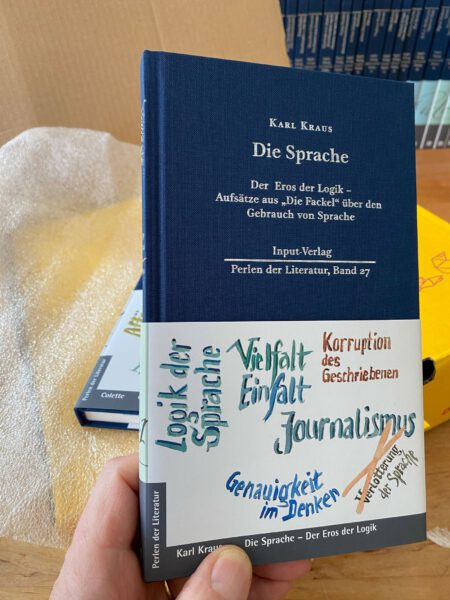 Karl Kraus saß, um es salopp auszudrücken, in meiner Familie mit am Tisch. Mein Bruder und ich liebten seine geistreichen Essays und geschliffenen Wortspiele, die unseren Wortschatz bereicherten. „Was zutrifft, trifft“ und „Es genügt nicht, keine Gedanken zu haben. Man muss auch unfähig sein, sie auszudrücken“ waren unsere Lieblings-Aphorismen aus der Feder des Karl Kraus. Leuten, die ihn nicht mochten, schrieb er folgendes ins Stammbuch: „Manche wollen nur mit mir reden. Andere mir den Kopf einschlagen. Vor jenen schützt mich das Gesetz.“ Wer „seinen“ Karl Kraus kennt, kommt mit einer Sammlung geistreicher Zitate gut durch das Jahr.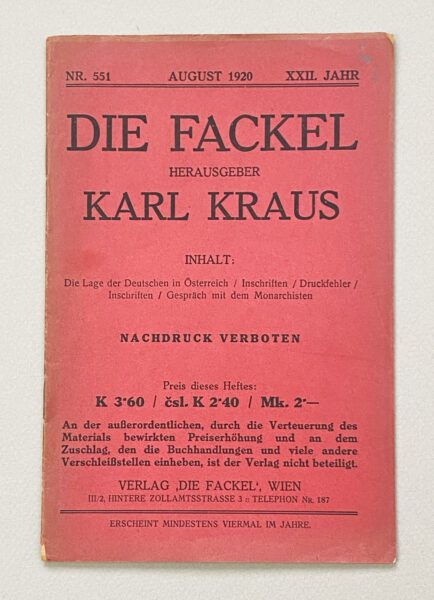
 Epilog: Viele unserer heutigen selbsternannten Satiriker müssten angesichts ihrer flachen Witzchen und primitiven Diktion vor Scham im Boden versinken. Sie wissen nicht, dass Satire mit der feinen Klinge des Floretts ausgefochten wird und nicht mit der Brechstange. Es ist sicherlich müßig, diesen vulgären Sprachpantschern Karl Kraus‘ Meisterwerk zu empfehlen. Sie würden es wohl kaum verstehen. Im Volksmund nennt man dies „Perlen vor die Säue werfen.“ Diese Perle aus dem Input-Verlag hat in der Tat etwas Besseres verdient.




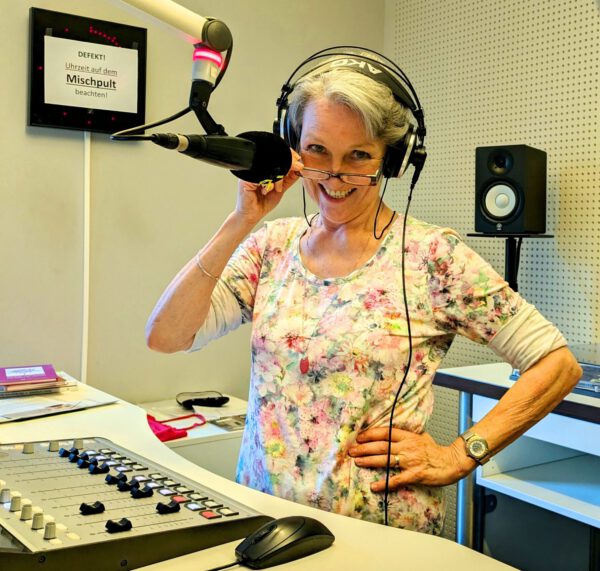
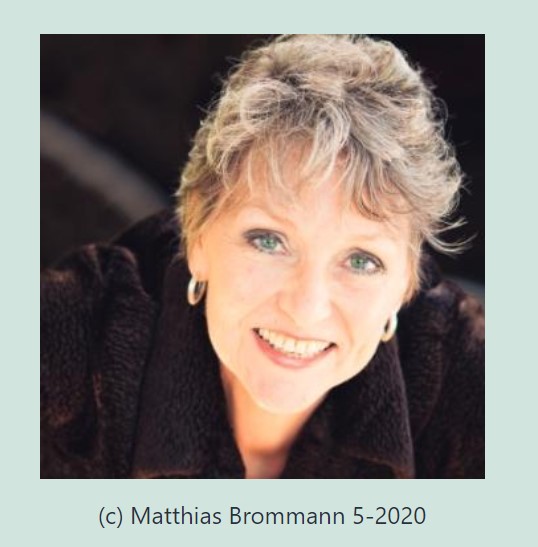 Die gebürtige Dortmunderin Kornelia Kirwald beschäftigte sich schon in Schule und Studium mit Theater. Ihre Ausbildung begann sie in Hamburg bei Margot Höpfner; an der Stage School, der Hamburg Media School und im Camera Acting Centrum Köln kamen Musical, Radio und Film/TV dazu. Sie spricht Synchron bei Studio Hamburg und NDR und spielt Fernseh- und Kurzfilmrollen, 2022/23 in Abschlußfilmen der FH Dortmund und zuletzt im ZDF. Engagements im Freien Theater und Tournéen führten sie durch Nord- und Westdeutschland: Sie gastierte mit Musical- und Chanson-Programmen; im Hamburger Engelsaal spielte und sang sie zahlreiche Haupt- und Nebenrollen, u.a. in „My Fair Lady“, „Loriot’s Dramatische Werke“, „Caruso!“ und in der „Großen Heinz-Erhardt-Show“. Als Chorsängerin unter der professionellen Leitung von Katharina Vogel bringt sie ihre Mezzosopran-Stimme in live-Konzerten ein. Mit ihrem Rezitationsprogramm LITERATUR – LIVE gastiert sie im Raum Hamburg; mit eigenen Sendereihen bei TIDE.radio und TIDE.tv hat sie für ihre Liebe zur Literatur seit 2005 ein professionelles Medienforum gefunden; ausgewählte Produktionen sind auf

 Gleich zu Beginn des Rundgangs wird man von einem sehr farbenfrohen Medley aus Werbespots, Haushaltstipps und Musikclips empfangen. Serien à la ‚Denver-Clan‘ oder Samstagabend-Shows wie ‚Wetten, dass…?‘ wurden die neuen Renner in der damals noch überschaubaren Menge der Fernsehsender. Und wie war das noch mit den Menschenmengen vor den Kaufhaustüren kurz vor dem Sturm auf die Grabbeltische beim Schlussverkauf? Der erste Macintosh-Computer, noch riesengroß und raumgreifend, kam auf den Markt und mit ihm die Bildung zweier Lager, die bis heute bestehen: Apple-User versus Windows-Nutzer.









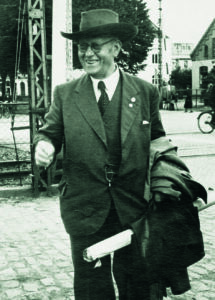

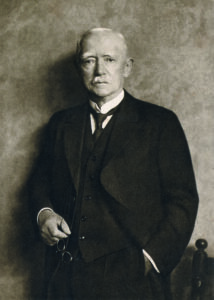
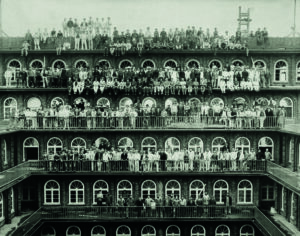



 Michael Batz: ChilehausStory · 100 Jahre einer Hamburger Legende, Dölling & Galitz, Hamburg 2024, Gebunden, 232 S.


 Der Roman ist im stationären und Online-Buchhandel erhältlich und kostet € 24,80. Bei der Herstellung des Hardcovers wurde auf Umweltstandards geachtet.
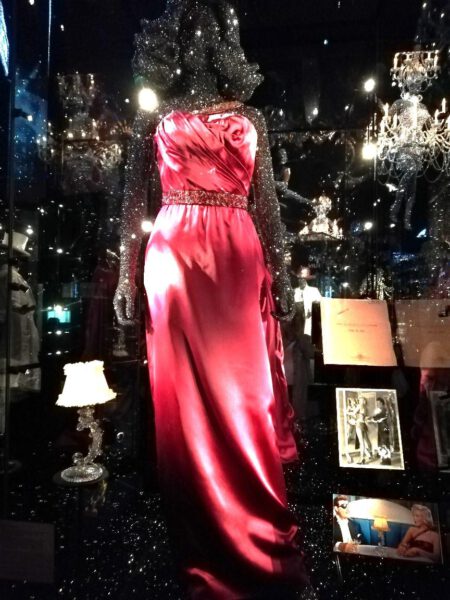 Es ist früher Morgen. Die Tautropfen auf den Wiesen glitzern mit den Kristallen um die Wette, welche in die aus grauem Drahtgeflecht bestehende Wolke eingewebt sind. Das Kunstwerk schwebt oberhalb der Swarowski Kristallwelten, die sich über eine Fläche von insgesamt 7,5 Hektar erstrecken.



 Otto Rank (1884-1939): 100 Jahre „Das Trauma der Geburt und seine Bedeutung für die Psychoanalyse“